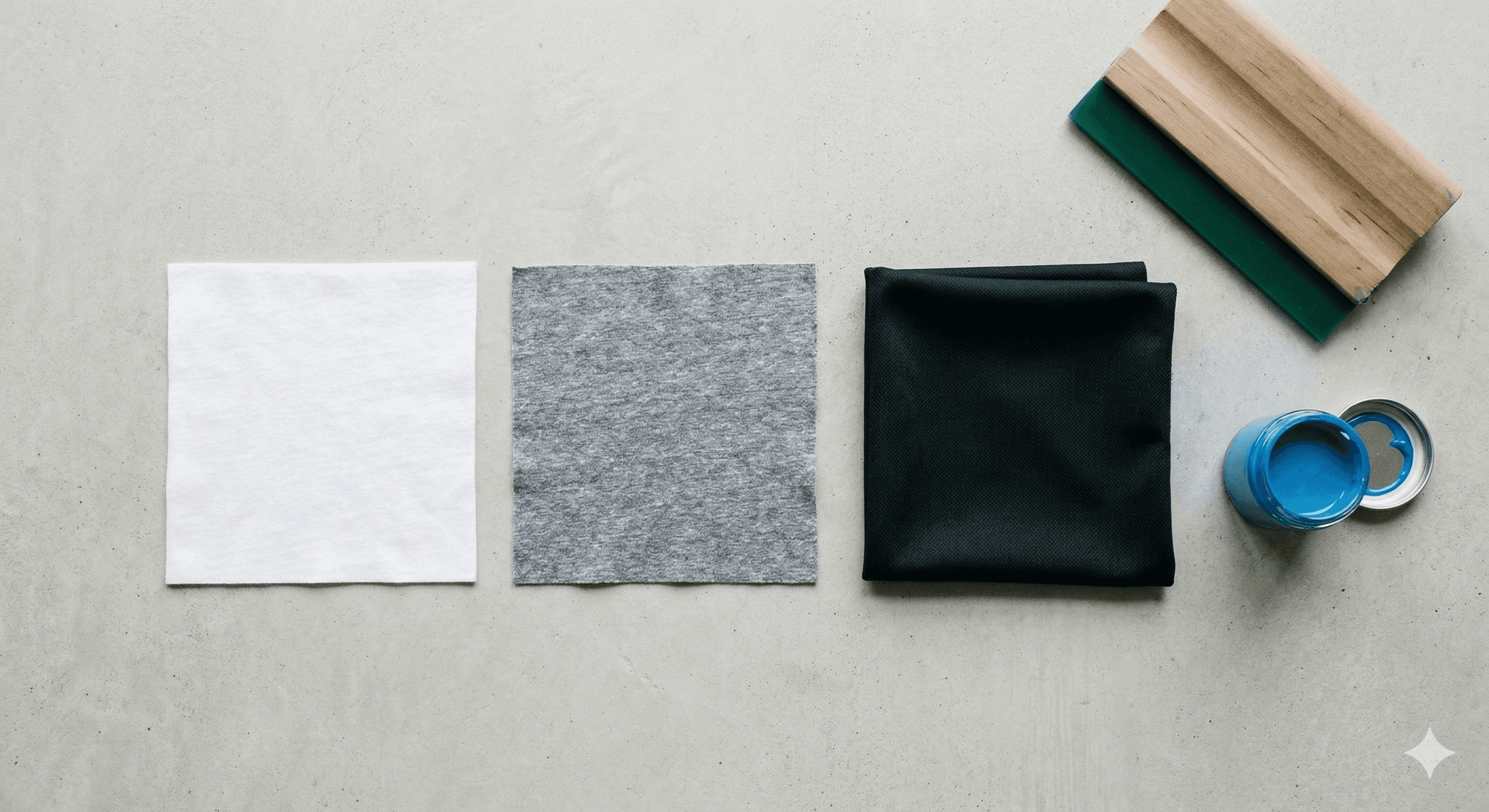
Not all fabrics take ink the same way. Here's which materials give you the best screen print results — and which ones to avoid.
Why Fabric Choice Matters for Screen Printing
Screen printing pushes ink through a mesh stencil directly onto fabric. The ink sits on top of the material and is cured with heat. That process works differently depending on what the fabric is made of, how it's knit or woven, and what texture it has.
Choose the right fabric and your print looks vibrant, smooth, and lasts hundreds of washes. Choose the wrong one and you get faded prints, rough texture, or ink that cracks after a few cycles in the dryer.
Here's a straightforward breakdown of common fabrics and how well they take screen printing ink.
100% Cotton — The Gold Standard
Cotton is the most popular fabric for screen printing for good reason. The natural fibers absorb ink well, producing vivid colors and a smooth finish. The prints are soft to the touch, especially with water-based inks, and they hold up to repeated washing.
Ringspun cotton is even better than standard cotton. The tighter weave gives a smoother surface, which means finer detail and a softer hand feel on the print. If you're doing a premium project — retail-quality merch, brand giveaways, or event tees — ringspun cotton is the move.
The only downside: cotton can shrink. Pre-shrunk cotton blanks solve this, but it's worth confirming with your supplier. Nobody wants a perfectly printed shirt that's a size smaller after the first wash.
Cotton-Poly Blends — The Practical Middle Ground
The most common blend you'll see is 50/50 or 60/40 cotton-polyester. These shirts are cheaper, more durable, and more wrinkle-resistant than 100% cotton. They're the go-to for schools, teams, and event giveaways where you need volume at a reasonable price.
Prints on blends look good but won't be quite as vibrant as on pure cotton. The polyester fibers don't absorb ink the same way, so you may see a slightly heathered effect on the print. For bold, simple designs this is barely noticeable.
One thing to watch for: blends with higher polyester content (65/35 or more) can suffer from dye migration — where the polyester dye bleeds through the ink, especially with lighter ink colors on dark shirts. Your printer should know how to handle this, but it's worth asking about.
100% Polyester — Possible but Tricky
Polyester is everywhere in performance wear, moisture-wicking tees, and athletic jerseys. It can be screen printed, but it requires special consideration.
Standard plastisol inks on polyester can feel stiff and crack more easily. The synthetic fibers don't bond with ink the same way cotton does. And dye migration is a real risk — the heat used to cure the ink can cause the polyester dye to bleed into lighter-colored prints, turning your white design pink or yellow.
The fix is using low-bleed or poly-specific inks and lower cure temperatures. If your shop has experience with polyester, they'll know the drill. If they hesitate, consider DTF heat transfer instead — it's often a better choice for polyester garments.
Tri-Blend — Premium Feel, Softer Print
Tri-blend fabrics (typically 50% polyester, 25% cotton, 25% rayon) have become hugely popular for their ultra-soft, vintage feel. They drape well and are comfortable all day.
Screen printing on tri-blends works, but the print takes on a slightly faded, vintage look by default — the mixed fiber composition means the ink doesn't saturate as uniformly. For a lot of brands, this is actually desirable. It gives prints a worn-in, retail quality feel right out of the box.
Tri-blends are typically more expensive per blank, so they're better suited for retail merch, branded apparel, or premium giveaways rather than bulk event tees.
Fabrics to Avoid
Some fabrics just don't play well with screen printing. Nylon is slippery and ink has trouble adhering. Silk is too delicate for the pressure and heat involved. Heavily textured fabrics (fleece, waffle knit, terry cloth) make it impossible to lay down a clean, even print.
Waterproof or DWR-treated fabrics will repel the ink. Spandex-heavy fabrics (like yoga pants or compression gear) stretch beyond what screen print ink can flex with, leading to cracking.
For these materials, other decoration methods like embroidery, DTF heat transfer, or sublimation are better choices. A good shop will tell you this upfront rather than trying to force screen printing onto a fabric that won't hold it.
Quick Reference: Fabric Compatibility
Here's the short version. 100% ringspun cotton is your best bet — vibrant prints, soft feel, great durability. Cotton-poly blends (50/50 or 60/40) are the practical workhorse for volume orders. Tri-blends give you that premium vintage look. 100% polyester works but needs special inks and an experienced printer. And anything nylon, silk, or heavily textured should go a different route.
When in doubt, ask your printer. Send them the exact blank you're considering and they'll tell you what to expect. Five minutes of conversation can save you from a box of shirts you're not happy with.

